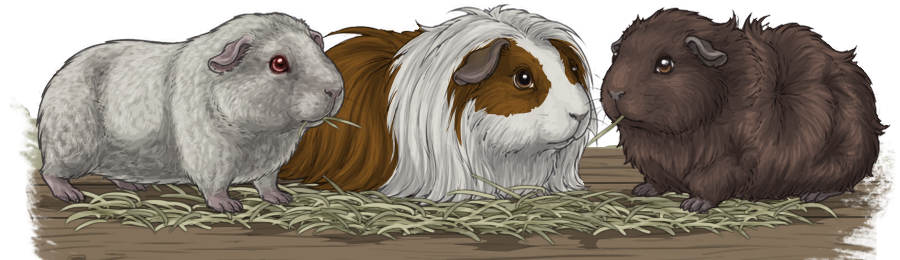
Read this entire guide before you introduce new guinea pigs to each other. Getting the technique right the first time is key to a successful bond.
Avoid multiple bonding sessions whenever possible. Repeated introductions cause stress, which can create tension between your guinea pigs. It's easier on everyone to set aside one full day, do the complete bonding process properly, and not have to repeat it later.
Before Getting Started
Quarantine New Guinea Pigs
Before doing anything else, keep new guinea pigs in a separate room from your existing pets for 1–2 weeks, with no contact between them. Do this even if your new guinea pig came from a trusted rescue or breeder.
Quarantine matters for three main reasons:
- It stops the spread of disease and parasites.
- The stress of moving can bring hidden illnesses to the surface, and quarantine gives those illnesses time to show up before the guinea pigs meet.
- It gives your new guinea pig time to relax and settle in, and gives you time to gather any supplies you're missing.
Set Aside a Full Day
Bonding is a full-day event, not something you squeeze in quickly on a busy day. Plan to be free all day, and let the guinea pigs stay in the bonding pen for as long as possible—there's no need to rush them back to their cage. Do not try to speed this up or cut corners on a process that needs time to work.
Setting the Scene
Choose a Neutral Bonding Space
Pick a large area your resident guinea pigs havn't already explored or "claimed." A spare bedroom, bathroom, or kitchen usually work well. An outdoor pen is also an option.
If you bond outdoors:
- Stay outside with the guinea pigs and supervise them the entire time.
- Keep them out of full, direct sunlight.
Never use the cage for introductions. Putting a new guinea pig into another guinea pig's established territory is a recipe for disaster—your resident guinea pig is far more likely to be defensive and aggressive.
Set Up the Bonding Pen
Set up an exercise pen in your chosen space, then add several large piles of hay around the floor and scatter fresh vegetables. Plenty of food means the guinea pigs don't feel like they need to compete for resources—and it gives them coverage, breaking up direct eye contact. Add hideys with multiple entrances too, like tunnels, so a guinea pig always has a way to retreat if it feels threatened.
Keep the environment calm and quiet while they get to know each other. Avoid loud noises and fast movements near the pen. Keep other pets, like cats and dogs, out of the room so there's no added pressure on the guinea pigs. Playing soft acoustic music or lullabies to help take the edge off.
Bonding Groups
When bonding a group, introduce all of them at the same time. Follow the same process described above: a large neutral area, every guinea pig starting on opposite sides of the pen, and no forcing interactions faster than they're ready for.
Don't introduce a couple of guinea pigs first and then add them to the rest of the group later. With guinea pigs, it's better to do it all at once. Bonding works best as a single whole-day event, with every guinea pig involved from the start. This way, the herd only has to establish its hierarchy once—instead of once in a small group, and then again when that group joins the larger herd.
When combining existing bonded pairs into one larger herd—for example, turning two pairs into a group of four—don't separate the existing pairs beforehand. Keep each pair together until the day of the group bonding session, then introduce everyone at once: both pairs, plus any new guinea pigs joining them.
During the Bonding Session
Introduce the Guinea Pigs
Place each guinea pig at opposite ends of the pen so they can approach each other in their own time.
- Don't rush them or force interaction.
- Some pairings take longer than others to settle in—give them a few hours to work things out and establish a hierarchy.
- Stay and observe them for the entire session. Don't leave them unattended until you're confident they will get along.
Stay Calm While You Watch
Guinea pigs are herd animals, and they pick up on your energy. If you're anxious, tense, or moving around a lot, they can sense it—and that can make them anxious too, which sometimes escalates into aggressive behavior.
While you supervise the bonding session:
- Stay quiet and calm.
- Avoid sudden movements.
- Avoid loud sounds, talking loudly, or shouting.
If you're worried your own presence in the room is making them anxious, set up a baby monitor or video camera and watch from the next room. You'll still be close enough to step in if you need to, without your energy or movement affecting how the guinea pigs behave.
Recognize Normal Behaviors
Some aggression during bonding is normal and not necessarily a bad sign—it's simply how guinea pigs sort out who's in charge. Normal dominance behaviors include:
- Mounting
- Teeth chattering
- Stomping
- Yawning
- Sniffing or licking another guinea pig's chin, eyes, or ears
- Nosing off
- Rumblestrutting
- Snorting
Only worry if you see several of these signs together—for example, a guinea pig that's teeth chattering, stomping and yawning at once may be about to lunge or attack.
You may also see the more submissive guinea pig respond with appeasement behaviors, like crouching low or letting out a loud, high-pitched squeak. This is normal too—it's their way of signaling they don't want to fight.
Guinea pigs also communicate with quick corrective nips, aimed at the mouth, ears, or rump, meant to say "back off" rather than to cause real harm. A corrective nip might leave a small pinch mark, but it's not the same as a bite that draws real blood, and it's not a reason to separate them.
Handle Scuffles
If your guinea pigs scuffle, stay calm. Fights can look and sound much worse than they are, even if the animals end up in a "ball of fur." Scuffling is a normal way guinea pigs communicate.
- Don't separate them for a scuffle alone—only step in if a fight leaves a significant, intentional injury—not just a small pinch mark from a corrective nip.
- Also watch for nipping that keeps repeating rather than happening once, or nips aimed at the eyes or feet—these are more serious than a nip to the mouth, ears, or rump.
- If you do need to separate two fighting guinea pigs, protect yourself with oven mitts or bite gloves.
Wrapping Up
Prepare the Cage
While the guinea pigs are bonding in the pen, use the time to get their shared cage ready. Unless it's a brand new cage, clean and rearrange the whole enclosure before adding the guinea pigs to it.
- Clean the cage with a 50/50 vinegar and water solution. This removes scent markings and "descents" the cage, which makes it easier for your resident guinea pig to accept a newcomer in their territory later.
- Rearrange the layout so it doesn't look or smell like anyone's established territory.
- Give every guinea pig their own hidey, food bowl, and water bottle.
- Spread plenty of hay across the whole cage floor, so food and water are easy to reach from anywhere. This helps prevent resource guarding and aggression, especially in males.
- Choose hideaways with multiple exits. Submissive guinea pigs need to be able to run away if they feel threatened—a guinea pig that feels cornered is more likely to fight. Tunnels, "fleece forests," and Rubbermaid plastic stools all work well.
Signs They're Getting Along
Before moving your guinea pigs into their shared cage, look for signs that they've settled into a hierarchy and are comfortable with each other:
- Eating, drinking, or grooming near each other without tension
- Resting or sleeping close together
- Exploring the pen calmly side by side
- Popcorning (excited little hops) near each other
- Friendly chasing, without either guinea pig acting scared or cornered
- Sharing hay or vegetables without guarding them
A little dominance behavior can still show up even once things have calmed down, and that's fine. What you're looking for is a general sense of calm: no more chasing, no repeated mounting, and no signs one guinea pig is too afraid to move around the pen. Once you're seeing that, they're ready to move into their shared cage.
Move Them Into Their Shared Cage
Once the dust has settled and you're seeing the signs above, it's time to move them into their cage together:
- Do a final check that the cage is set up the way you prepared it—clean, rearranged, and with plenty of hay.
- Move the guinea pigs into the cage together.
- Keep observing them for a while afterward to make sure no fights break out now that they're in their permanent space.
And voilà! You've got a bonded herd!
After Bonding
The Honeymoon Phase
A successful bonding session doesn't mean the bond is finished. It can take several days or even weeks for a bond to truly solidify, and first impressions don't always last. Think of it like meeting a person you got along with right away, only to decide later that you didn't actually like them. Guinea pigs can have a similar shift once the initial novelty of meeting wears off.
Some guinea pigs go through a "honeymoon phase" for the first few days, where everyone gets along well, only to have a falling out after about three days once that phase wears off. This isn't common, but it does happen, so it's worth watching your guinea pigs closely during this period, even if the first day went smoothly.
Monitoring the First Few Weeks
Even after a smooth bonding session, keep an eye on your guinea pigs for the first couple of weeks in their shared cage. Check that:
- Every guinea pig is eating normally and maintaining their weight
- No one is being pushed away from food, water, or hideys
- The hierarchy behaviors have settled down rather than continued or escalated
It's much easier to fix a small problem early than to deal with a serious conflict later. If tension keeps coming up, offering more space and resources is often enough to fix it.
When a Falling-Out Turns Serious
If your guinea pigs have a falling-out that turns into real fighting, don't panic—but do pay attention to how serious it is.
- If it's dominance behaviors and scuffling without a real injury, treat it the same as during the original bonding session: stay calm, keep watching, and only step in if a fight actually draws blood.
- If a fight does draw blood, or if bullying becomes severe enough that one guinea pig is losing weight, hiding constantly, or otherwise struggling, separate them. Keep their cages within sight, sound, and smell of each other rather than isolating either pig completely.
- Periodically check each guinea pig's rump for scabbing or bald patches, especially in a larger group. Repeated nipping to the rear can happen even when you're not around to see it, and scabbing there is often the first sign that one guinea pig has become an ongoing target—the outcast of the group. Take it seriously even without witnessing a fight, and watch that guinea pig closely for other signs of bullying.
If they don't get along even after being given more space, that pairing may need to stay separated for good. That isn't a failure on your part—some guinea pigs simply don't get along, and forcing it isn't fair to either of them.