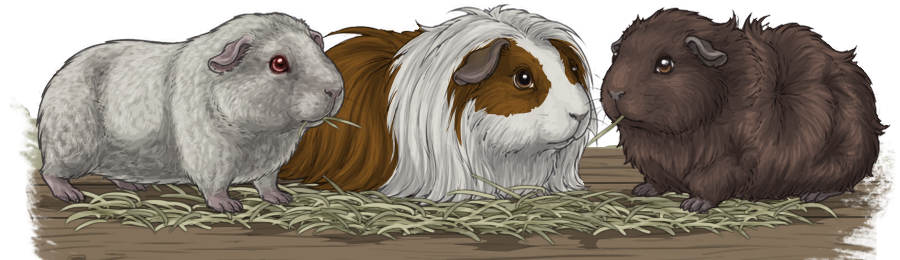
Guinea pigs are self-grooming animals. They spend a good part of each day cleaning themselves, and under normal conditions that's all the bathing they need. Baths aren't part of the guinea pigs regular care routine the way they are for a dog. Most guinea pigs go their whole lives without ever needing one. Only bathe your guinea pig if they're genuinely filthy, or if a vet has told you to for medical reasons—treating bath time as a regular grooming habit often does more harm than good.
Before You Bathe
Check for Illness First
A guinea pig who's gotten very filthy is oftentimes sick, not just messy. Healthy guinea pigs groom themselves constantly and move around their cage throughout the day. A coat full of dried urine or matted debris usually means something has stopped them from keeping up with their own care.
Watch for these red flags:
- Wallowing or sitting in one spot all day, instead of moving around and exploring
- Urinating or defecating on themselves—a healthy guinea pig simply doesn't end up in that state
- General lethargy, or not responding to you the way they normally would
If you see any of these signs, get your guinea pig checked out by a vet first, before you even think about a bath. Cleaning them up without addressing what caused the mess in the first place only treats the symptom.
Bathing a sick guinea pig can cause hypothermia and shock—both of which can be fatal. An already-compromised body has a much harder time regulating its own temperature, and the stress and cold of a bath can push a sick guinea pig past what their system can handle. If your guinea pig is unwell and has become dirty, clean them with an unscented, aloe-free baby wipe or a sponge bath instead. Wait until they've recovered, and been cleared by a vet, before considering a full bath.
How Often to Bathe
Guinea pigs shouldn't be bathed more than 2-3 times a year. Their skin relies on natural oils to stay healthy, and frequent bathing strips those oils away faster than their body can replace them. Over-bathing can leave their skin dry, flaky and itchy. Resist the urge to bathe them just because they seem a little dusty or have a bit of debris caught in their fur.
Skip Bath Day When It's Cold
Never bathe a guinea pig on a cold day. Small bodies lose heat fast, so a wet guinea pig can get chilled quickly—well before their coat is actually dry. Cold air also makes it harder for them to dry off in the first place, so the risk lasts even longer. If your home runs cold, or it's winter, keep the bathroom door closed while you bathe them so the room traps warm air, and consider running a space heater nearby to take the chill off—just keep it a safe distance from any water.
Never Let Them Swim
Some owners assume that because guinea pigs can technically paddle, a shallow kiddie pool or a "swim" is a fun enrichment activity. It isn't.
Remove Mats Before Bathing
When bathing is necessary, remove any mats beforehand. Water causes mats to tighten, making them harder to remove once wet. Mats also take longer to dry, which can make it harder for a guinea pig to stay warm and increase the risk of hypothermia.
Brush out or carefully trim any mats before bathing—see our Longhair Care guide for detangling technique. If a mat is too severe to safely remove at home, see an exotics vet rather than bathing with the mat still in place.
Preparing for Bath Time
Guinea pigs are naturally afraid of water. Bathing is stressful for them even under the best conditions, since it involves being handled and submerged in ways their instincts don't read as safe. If a bath is genuinely necessary, the goal is to get it done correctly, calmly, and quickly—minimizing that stress at every step rather than adding to it.
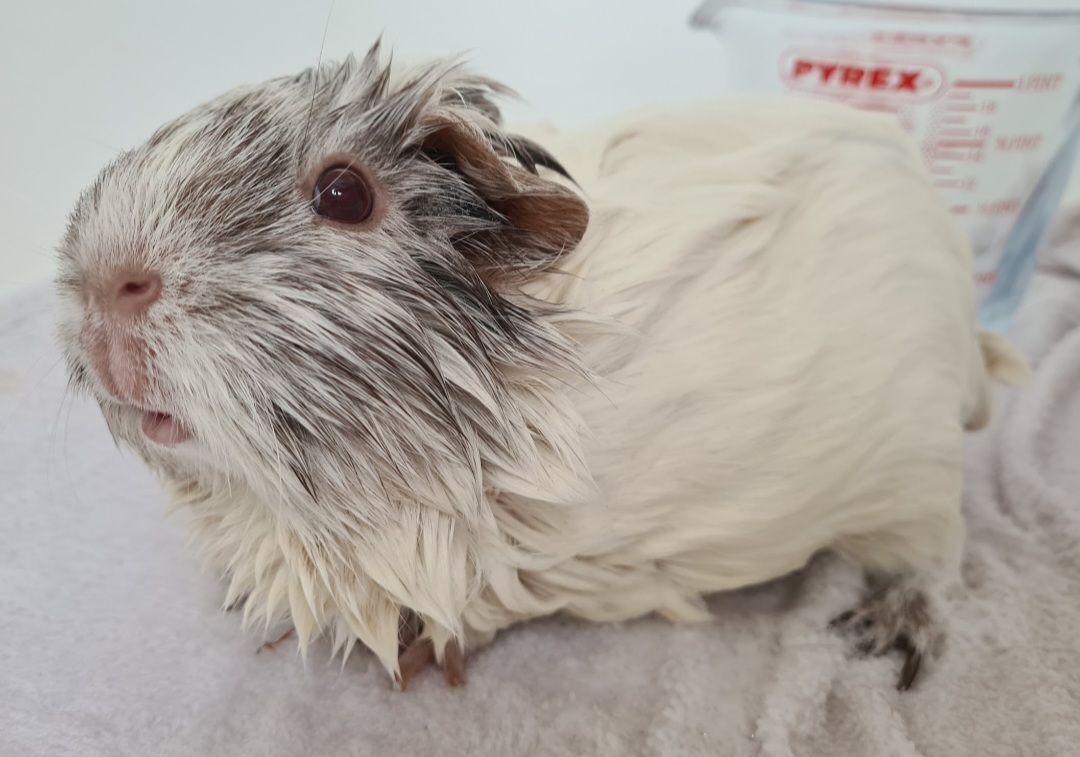
Have everything ready before you start: basin, warm water, shampoo, and towels, all within arm's reach. Draw or turn on the water just before you bring your guinea pig into the room, so they aren't startled by the sound right as bath time begins.
Baths vs. Showers
Showers are usually easier on a guinea pig than a traditional bath. Guinea pigs dislike standing water, and some will try to jump out of a basin because of it. A gentle, low-pressure stream of lukewarm water avoids that problem, so try a shower first if you have the option. Traditional baths work fine too, as long as you take a few extra precautions to keep your guinea pig safe and comfortable.
Traditional baths
Use a small basin, like a baby bath or washing-up bowl. Add only a small amount of water—shallow enough that your guinea pig can stand comfortably, without the risk of slipping or swimming.
A slip in the tub isn't just startling. It can cause a leg injury on an animal whose bones are fairly delicate, on top of adding stress to an already frightening experience. A wash cloth or silicone makeup brush cleaning pad on the bottom of the basin gives them something to grip, the same way a bath mat does for a person.
Standing water scares guinea pigs enough that some will try to jump out of the basin altogether. Be prepared for this, and keep a hand ready to catch or steady them at all times.
Showers
Use a handheld showerhead, or pour water gently over their body with a cup. Let the water run off rather than pool underneath them. Keep water away from their head. Keep the pressure gentle. Keep the whole thing quick, just like a regular bath.
If you use a shower head, choose one made for animals, with an on/off switch on the handle. Most guinea pigs startle at the sound of running water — you'll often see their ears go back and them jump when it turns on. Being able to switch the water off while you scrub, instead of leaving it running, makes a real difference.
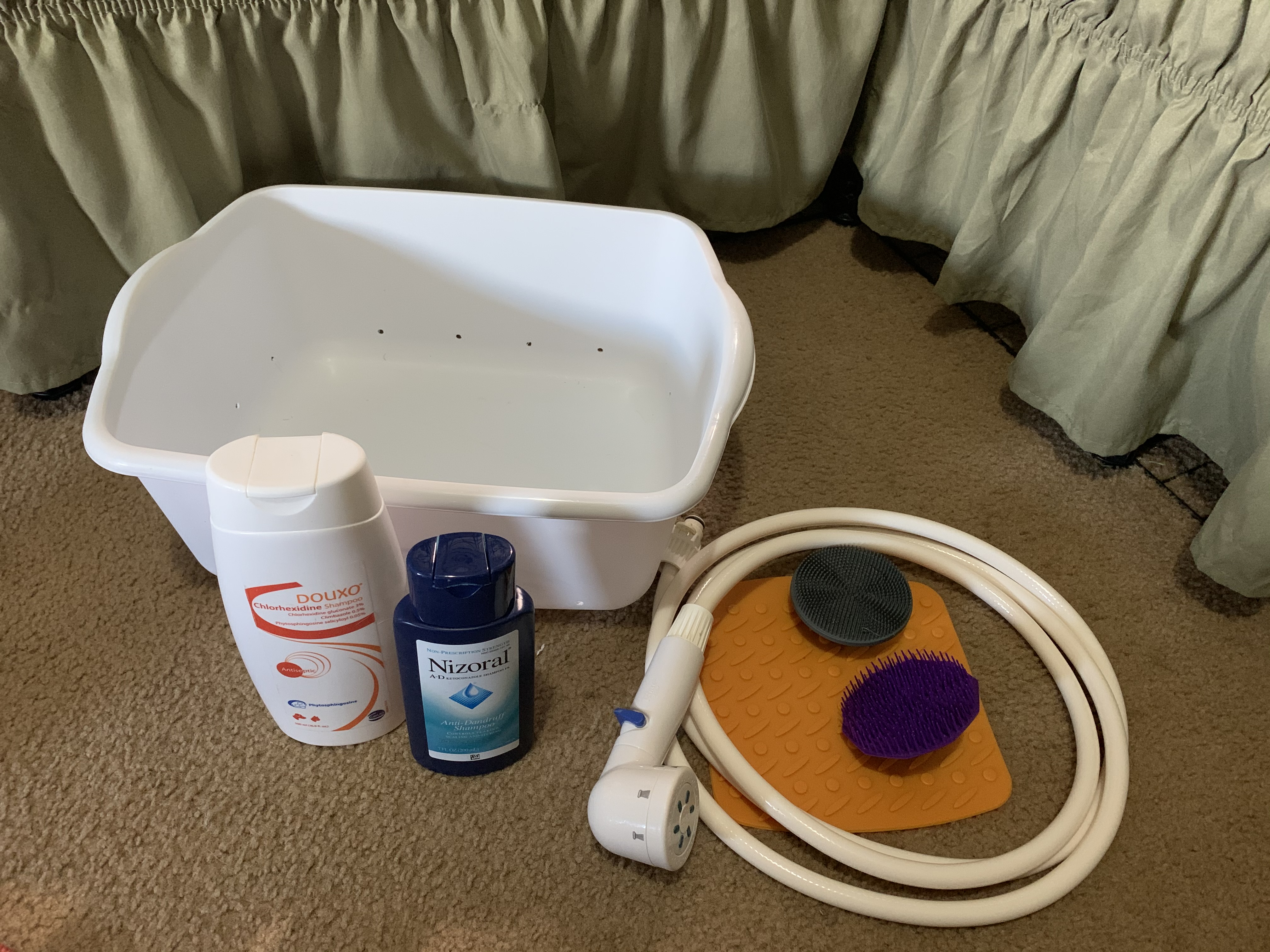
One technique pairs especially well with a shower: drilling a few holes along the bottom of a plastic basin, so water drains out as fast as it comes in. Stand your guinea pig in this basin while you shower them. It keeps them contained to one small spot instead of running loose around the tub, and most guinea pigs feel more secure in a small space than an open one.
Water Temperature
A guinea pigs body temperature runs a little higher than ours—typically somewhere around 101 to 104°F, compared to our own 98.6°F. That means water that feels comfortably warm to your hand can actually feel cool to them. Aim for water on the warmer side of lukewarm, and check it against the inside of your wrist rather than your fingertips, since your wrist is more sensitive and gives you a better read on the true temperature.
Keep in mind a guinea pig bath uses a much smaller amount of water than you'd draw for yourself, so it cools far faster than you'd expect—often within a couple of minutes. This is exactly why speed matters so much: your guinea pig can go from comfortably warm to uncomfortably cold in the time it takes to take a photo or grab a forgotten towel.
Keep Water Away From the Head
Water should never touch your guinea pig's head. Bath water in their ears, nose, or eyes can cause respiratory issues or infections. Their ear canals trap moisture easily, which makes infection more likely there. Keep the head off-limits to water entirely. Clean it with a baby wipe instead, wiping gently around the ears and eyes.
The one exception is the chin. On elderly guinea pigs and those with dental disease, the chin can get quite dirty from drooling or trouble grooming. You can rinse the chin if needed. Just keep water away from the ears and face while you do it—a slow trickle gives you more control than a direct stream.
Choosing a Shampoo
Look for a shampoo made specifically for guinea pigs, or a gentle, fragrance-free product formulated for sensitive baby skin. Avoid dish soap and most human shampoos, which are too harsh and can strip or irritate their skin.
Avoid strong fragrances, like lemon, cedar, or pine. Guinea pigs have sensitive respiratory systems, and heavily scented products can irritate them. Cedar in particular is toxic to guinea pigs and should be avoided entirely.
Safe shampoo options include:
Nizoral and Malaseb are both antifungal shampoos, which gives them an added benefit beyond just cleaning: they leave behind some residual protection against fungal issues like ringworm for a little while after the bath. Nizoral's blue tint is also a practical plus if your guinea pig has white fur, since the bluing helps make white fur look cleaner and brighter.
Bath Time, Step by Step
A bath should never last more than 5 to 10 minutes from start to finish. You're using a small amount of water, so it cools down fast, and a chilled guinea pig is at risk of hypothermia. Move efficiently to get them in and out before that happens. This isn't a photo opportunity—every extra minute spent posing for pictures is a minute they're getting colder and more stressed.
- Fill the basin with a small amount of warm water, no deeper than your guinea pig's belly. Double-check the temperature against your wrist right before you begin.
- Gently place your guinea pig in the water. Support them the whole time, and speak to them softly to help keep them calm—a steady voice can genuinely help settle a nervous guinea pig, even if it doesn't eliminate the stress entirely.
- Wet just their bottom first, leaving the rest of their body dry. Apply a small amount of guinea pig-safe shampoo and lather gently, then rinse thoroughly. This targets the area that needs it most, since a full bath is really only necessary for a very dirty guinea pig.
- Wet the rest of their body with your hand or a cup, working from the neck back and avoiding the head entirely. Keep your movements slow and predictable rather than quick or sudden.
- Apply shampoo and lather gently over their whole body, still avoiding the head. A little goes a long way—you're not trying to work up a thick lather, just enough to lift dirt and debris out of the coat.
- Rinse thoroughly until the water runs clear so no shampoo residue remains. Leftover shampoo can dry out their skin and irritate it, so it's worth taking a few extra seconds here even as you're trying to move quickly overall.
- Lift your guinea pig out and wrap them immediately in a dry towel, so they're not sitting exposed and dripping while you gather your next supplies.
Drying and Aftercare
Drying your guinea pig completely is just as important as the bath itself. A damp guinea pig left to air dry is at real risk of getting cold or sick, since wet fur next to the skin pulls heat away from the body far faster than dry fur does. Start by gently squeezing and blotting excess water out with a towel, working section by section rather than one quick rub.
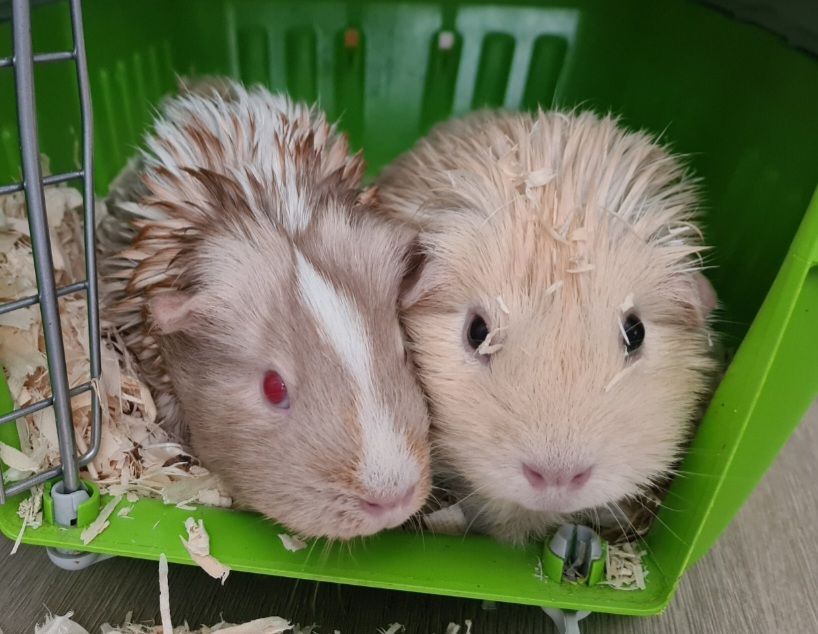
If your guinea pig will tolerate it, finish with a hairdryer on a low heat setting. This helps make sure they're fully dry, not just dry to the touch. Keep the dryer moving, and hold it a reasonable distance away rather than in one spot. Stop if your guinea pig seems distressed. A towel dry alone is better than forcing a hairdryer on a guinea pig who won't accept it, even if it takes a little longer to finish drying naturally.
Once they're dry, keep them somewhere warm and draft-free until you're confident they've fully recovered from the stress of the bath. This isn't the moment to put them back in a room with an open window or a drafty corner. A little extra hay or a favorite treat can help settle their nerves and turn the experience toward something more positive before they head back to their normal routine. A gentle brushing can also help smooth out their coat and remove any remaining loose fur, giving the whole experience a calmer, more comfortable finish.