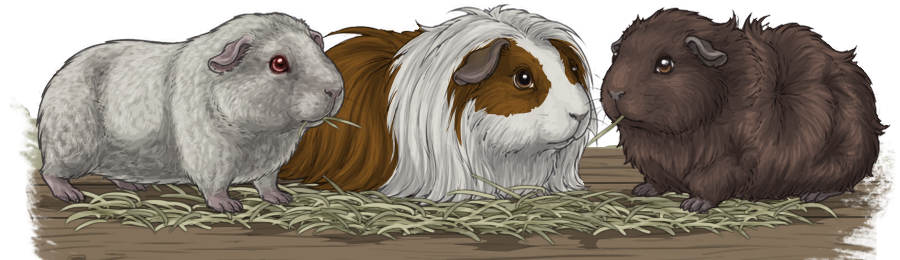
Longhaired guinea pigs, like Peruvians, Silkies, Shelties, Coronets, and Texels need more frequent, specialized grooming than shorthaired breeds. Daily brushing and haircuts are necessary—not optional. Before bringing home a longhaired breed, make sure daily grooming is something you can realistically keep up with.
Without regular grooming, a long coat can tangle and mat quickly. Mats aren't just a cosmetic problem. They pull painfully on the skin. They also trap moisture, urine, feces, and debris against the body, creating an ideal environment for bacteria growth and subsequent skin problems.
Daily Coat Checks
A quick coat check should be part of your longhair guinea pigs daily routine, even on days you don't brush them. Pay close attention to areas where hair tends to tangle or get dirty:
- Behind the ears
- Around the cheeks and chin
- Behind the front legs
- The belly and underside
- The rump and hind legs
- Around the genital area
Check for tangles, mats, damp or dirty fur, and bits of hay, bedding, or grass caught in the coat. Long hair can hide problems against the skin, so don't rely on looking at the outer layer alone. If your guinea pig spends time outdoors, give the coat a quick check afterward too—plant stickers can cling and tangle into long fur surprisingly fast.
Brushing
Always start with a wide-tooth detangling comb rather than a standard brush. Work from the tips of the hair toward the roots, gradually working your way through the coat. Working tip-to-root avoids pushing tangles into hair that's already smoothed, where they'd turn into bigger, more painful knots.
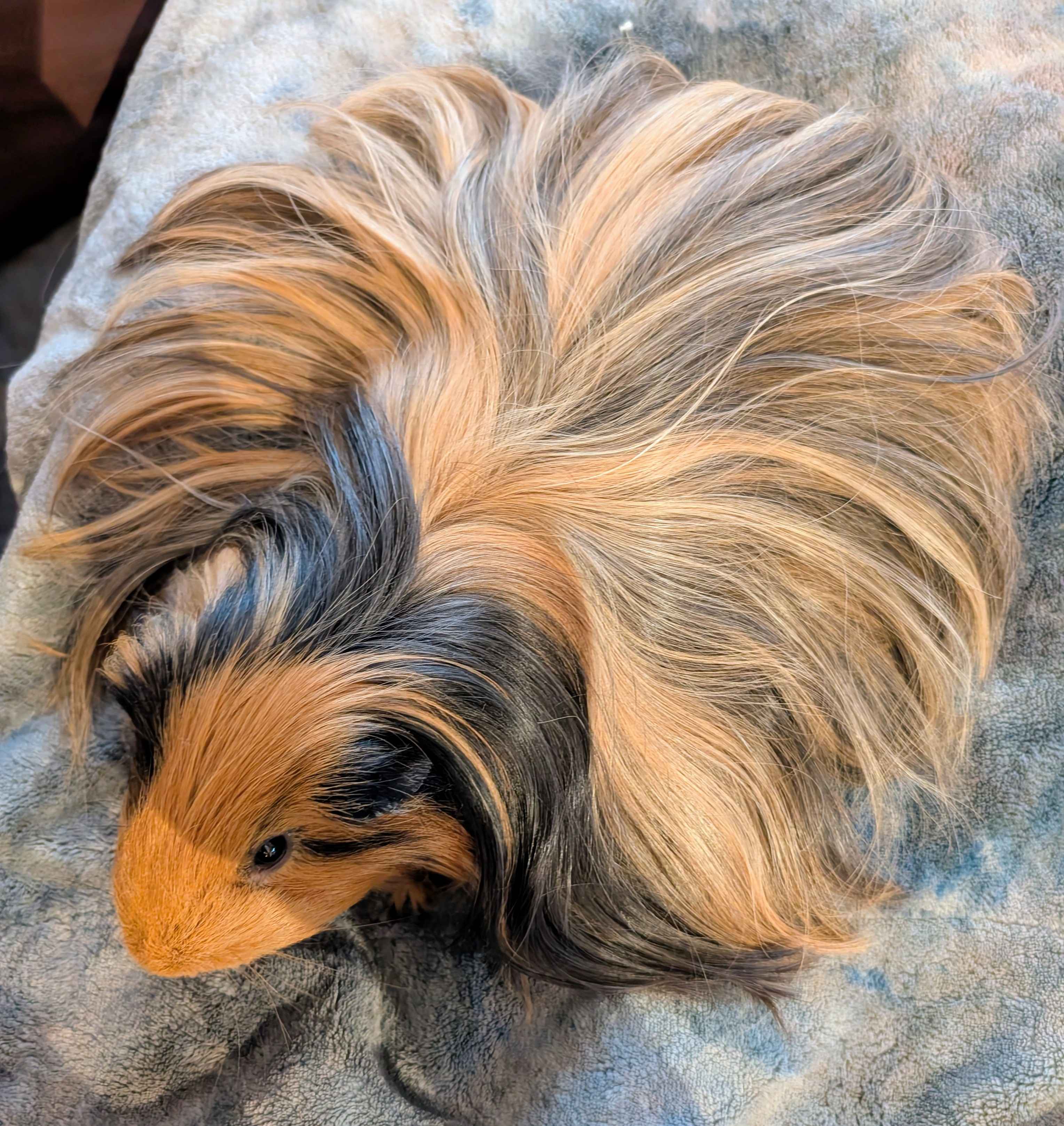
For stubborn knots, pinch the hair between your fingers right at the base, close to the skin, then comb through the tangle above where you're holding. Your fingers absorb the pulling, so the knot gets the tension instead of the skin. Don't pull the hair away from the body yourself while you comb—let your fingers anchor it in place instead.
If the coat is hard to detangle, an aloe-free, fragrance-free children's detangling mist can help the comb glide through—we typically recommend Aveeno Kids Hydrating Detangling Spray. Use only a small amount, and avoid getting it directly on the skin. A small amount of diluted coconut oil can help with stubborn tangles too. It can weigh down fine guinea pig fur, though, leaving it greasy or harder to manage in the future. So use coconut oil sparingly, not as a routine grooming product.
Once the coat is fully detangled, you can switch to a pin-and-bristle brush to finish and smooth things out.
Keeping Up With It
Daily brushing is the best way to prevent mats before they start. A coat brushed every day rarely gets bad enough to need real work. A coat that's skipped for even a few days can tangle surprisingly fast. Make grooming part of your guinea pig's regular routine rather than waiting until the coat looks tangled—it's much easier on both of you than working through a severely matted coat later.
Haircuts
Long-haired guinea pigs need occasional haircuts on top of regular brushing.
A sanitary trim focuses on the underside, genitals, and rear. Give your guinea pig a sanitary trim once a month, or sooner if the hair becomes unmanageable. Keeping this area trimmed short helps keep the coat cleaner and easier to maintain between cuts, and it helps prevent urinary tract infections that can develop when soiled hair stays in contact with the skin.
Other trims are more situational. Hair around the face sometimes needs a trim so a guinea pig can see properly, or if it's grown dirty around the mouth. Hair elsewhere on the body may also need trimming if it's grown long enough to drag on the floor, through urine and bedding. If you're not sure whether a trim is needed, a good rule of thumb is: if the hair is affecting your guinea pig's ability to see, move, eat, or stay clean, it's time to trim.
Hair Cutting Scissors
Blunt-tipped haircutting scissors are the safest and quickest tool. They're sometimes sold as "pet grooming scissors" or "safety scissors," and the rounded tip is the key feature—it lets you work close to the skin without the risk of accidentally poking or nicking your guinea pig if they shift or wiggle. Regular household scissors can work in a pinch, but use extra caution if they have sharp, pointed tips, since those carry a risk of injury risk. It's best to have another person hold your guinea pig steady while you trim, so you can focus on the scissors and the coat rather than a wiggling guinea pig.
Warning About Clippers
Be cautious using clippers to cut a guinea pig's hair. Standard clippers can be loud enough to cause a lot stress—and severe stress can contribute to serious problems like heart issues, gastric stasis or shock. If you do use clippers, choose a smaller model made for pets, with a decibel level. A quieter, gentler tool goes a long way toward keeping the experience manageable rather than frightening.
Clippers also carry a risk of the blades catching and damaging the skin and hair follicles, particularly around tangled or matted areas. Take it slow, and stop and switch to scissors if your guinea pig seems distressed.
Full Shave
Never aggressively brush or comb out a tight mat. Pulling repeatedly on a mat can be painful and may injure the skin underneath it.
If a guinea pig becomes severely matted, beyond what brushing and a trimming can safely handle, see an exotics vet rather than attempting a full shave at home. Severe matting can be painful and may have already caused skin irritation underneath. Mats can also sit tight against the skin, making them hard to remove without nicking it. A vet can assess the skin under the mats and, when needed, provide mild sedation and pain relief before safely shaving them out—far safer and less traumatic than attempting it yourself at home.
Bathing
Longhaired guinea pigs don't automatically need more baths just because they have long coats. Regular brushing and trimming matter more than routine bathing. Frequent, unnecessary bathing can dry out or irritate the skin, and adds stress on top of it. Consider trimming the fur low and allowing it to regrow cleaner, rather than giving your guinea pig a full bath.
When bathing is necessary, remove any mats beforehand. Water causes mats to tighten, making them harder to remove once wet. Mats also take longer to dry, which can make it harder for a guinea pig to stay warm and increase the risk of hypothermia. Use the detangling technique described above to brush out or carefully trim any mats before bathing. If a mat is too severe to safely remove at home, see an exotics veterinarian.