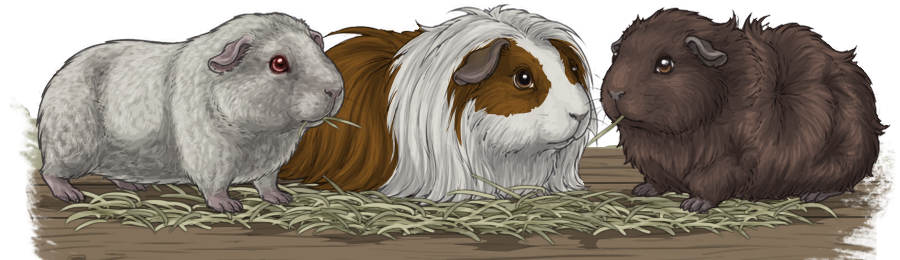
Floor time is supervised playtime outside the cage, usually in a playpen or a guinea-pig-proofed room. It gives them room to stretch their legs, explore new territory, and burn off energy in a way a standard cage just can't offer.
Herd Behavior
Guinea pigs feel safest in numbers, and floor time is often where this shows the most. A single guinea pig taken out alone can find the experience stressful rather than fun. Without a herd mate nearby, a solo guinea pig may freeze, hide, or refuse to explore instead of relaxing into the session. Floor time works best—and is least stressful—with at least two guinea pigs out together.
A few behaviors are common once a herd is out together. One is the guinea pig train, where they follow each other in a single-file line around the space. You may also see some dominance displays as guinea pigs show off in the new space. This is just guinea pigs reenforcing the pecking order in an unfamiliar territory.
Playpen Essentials
A good floor time setup provides all the basis: food, water, safe places to hide, and a bit of enrichment to keep things interesting. Whatever space you use, aim for a playpen noticeably larger than their cage—the extra room is the whole point of floor time, and it gives your guinea pigs more distance to run, explore, and popcorn around.
Hay and Water
Keep hay and water available at all times, even during play. Guinea pigs graze continuously, and their digestive systems depend on a steady intake of hay to keep moving properly. Even a gap of a few hours can cause health problems. Put a large pile of hay and a water bottle (or bowl) in the play area so they can eat just as they would in their cage.
Hiding Spots
Guinea pigs are prey animals. A large, unfamiliar space can feel overwhelming, even if it's just your living room floor. Hideaways like tunnels or cardboard huts give them somewhere to retreat if they feel nervous. This helps them relax and explore more confidently. You can also rotate different hideaway shapes and textures between sessions to keep the space interesting.
Enrichment Extras
Scatter toys, chewable items, and some treats around the space. This encourages natural foraging behavior and gives your guinea pigs a reason to explore the whole area instead of sticking to one corner. Forage mats, willow balls, and cardboard tunnels are all good low-cost options. Rotating what's on offer helps keep things interesting over time.
Setup Safety
Check the following before every session.
Block Off Gaps
Block off any gaps where a guinea pig could get under a couch, cabinet, fridge, or other furniture. Guinea pigs are surprisingly good at squeezing into tight spaces. Once wedged, they cannot always free themselves—and retrieving them can be difficult and stressful for everyone. Storage cube grids are a simple way to block off gaps like these.
Remove Hazards
Clear the area of wires, cables, sharp objects, and house plants. Some house plants are toxic if ingested, and a chewed electrical wire can be fatal. Do a full sweep before every session. Cables and small objects have a way of migrating back into a space between uses.
If you can't remove wires entirely, protect them instead. Cable sleeves or split-loom tubing keep guinea pigs from being able to chew through cords, and outlet covers stop them from investigating sockets. Many child-proofing products work just as well for guinea pigs, since the goal is the same: keep curious mouths away from anything electrical.
Check the room for pest control items like traps, baits, or poison left out for rodents or insects. These are usually placed low to the ground, exactly where a roaming guinea pig will find them, and even a small dose can be fatal. Remove them from the space entirely before a session rather than assuming your guinea pig will avoid them.
Secure Other Pets
Keep other household pets, like cats, dogs, rabbits, or birds, safely away from the area while your guinea pigs are out. Even a generally calm animal could injure a guinea pig, or trigger a fear response by chasing or getting too close. Keep other animals in a separate room, or crated, for the floor time session.
Watch Your Step
Be very careful when walking around the space. Stepping on a guinea pig, even lightly, can cause serious injuries such as broken bones or internal damage. So it's worth moving slowly and checking where they are before you shift your feet or sit down. Using a dedicated playpen creates a defined boundary, which not only protects your guinea pigs from the rest of the room.
Avoid Elevated Surfaces
Many owners let their guinea pigs roam on beds, sofas, or tables, but these surfaces pose a significant fall risk. Guinea pigs have poor depth perception and no instinct to stop at an edge, and a fall from even a modest height can cause serious injury. If you do allow floor time on an elevated surface, stay within arm's reach the entire time and block or watch every edge closely. A playpen set up on the floor is the safer option.
Block Off Staircases
The same fall risk applies to stairways, so block them off if you're doing open floor time rather than using a playpen. Use a baby gate or other secure barrier with gaps narrow enough that a guinea pig cannot squeeze through, as many standard baby gates have openings large enough for a small guinea pig to slip through. A playpen eliminates the issue altogether by keeping guinea pigs away from the stairs.
Supervise the Whole Session
Never leave your guinea pigs unattended during floor time, even for a moment. A guinea pig left alone can squeeze into a gap you missed, chew something hazardous, or get into a fall risk faster than you'd expect. If you need to step away, even briefly, put your guinea pigs back in their cage first.
Cleanup
Guinea pigs will go to the bathroom during floor time—this is normal. Each pee is only a few milliliters, so a single accident on carpet or furniture isn't a big concern, but it can add up over a longer session or if you let them roam the same spot regularly. If you're worried about mess in the house, use a playpen instead of open floor time.
Line the base of the playpen with bedding before each session to protect your home and provide a sanitary surface for your guinea pigs. Fleece liners, blankets, towels, and whelping pads all work well. When the session is over, gather the bedding by the corners and shake it out outdoors or over a trash bag. If you use a mattress for floor time, place a waterproof mattress protector underneath the guinea pigs to protect the mattress from accidents.