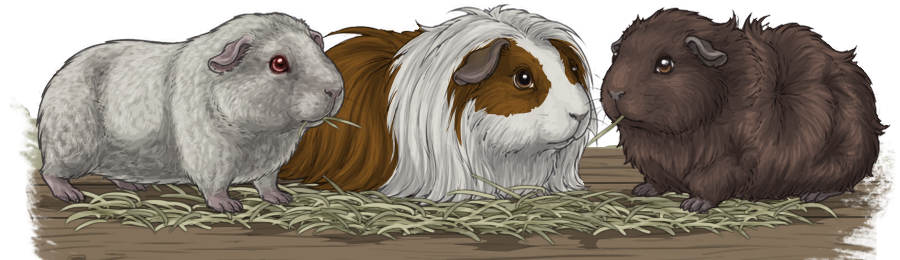
Outdoor time gives guinea pigs a chance to graze on fresh grass, experience natural sunlight, and explore an environment that indoor floor time can't quite replicate. It also introduces risks that don't exist indoors, including predators, weather, escape, toxic plants, and exposure to contaminated ground. A safe outdoor session starts with choosing an appropriate location and preparing it before the guinea pigs ever go outside.
Choosing an Outdoor Area
Outdoor time is best provided at home, in your own yard, where you can control the environment, check the grass, and know what your guinea pigs are being exposed to. If your yard is fenced, the fence can provide an additional barrier, but it does not replace a secure outdoor run. Guinea pigs should always remain in their run while outside rather than being allowed to roam freely, even for a few minutes.
Secure Runs
A secure run is the most popular option for outdoor time, and it works in almost any yard. You can build them yourself, or purchase premade outdoor pet runs. The run must be escape-proof and predator-proof, with secure sides and a secure top. An open top is not safe even in a fenced yard. Ground predators include cats, foxes, and dogs, but the greater danger is often overhead: birds of prey can strike within seconds, which is exactly why the top of the run needs to be just as secure as the sides.
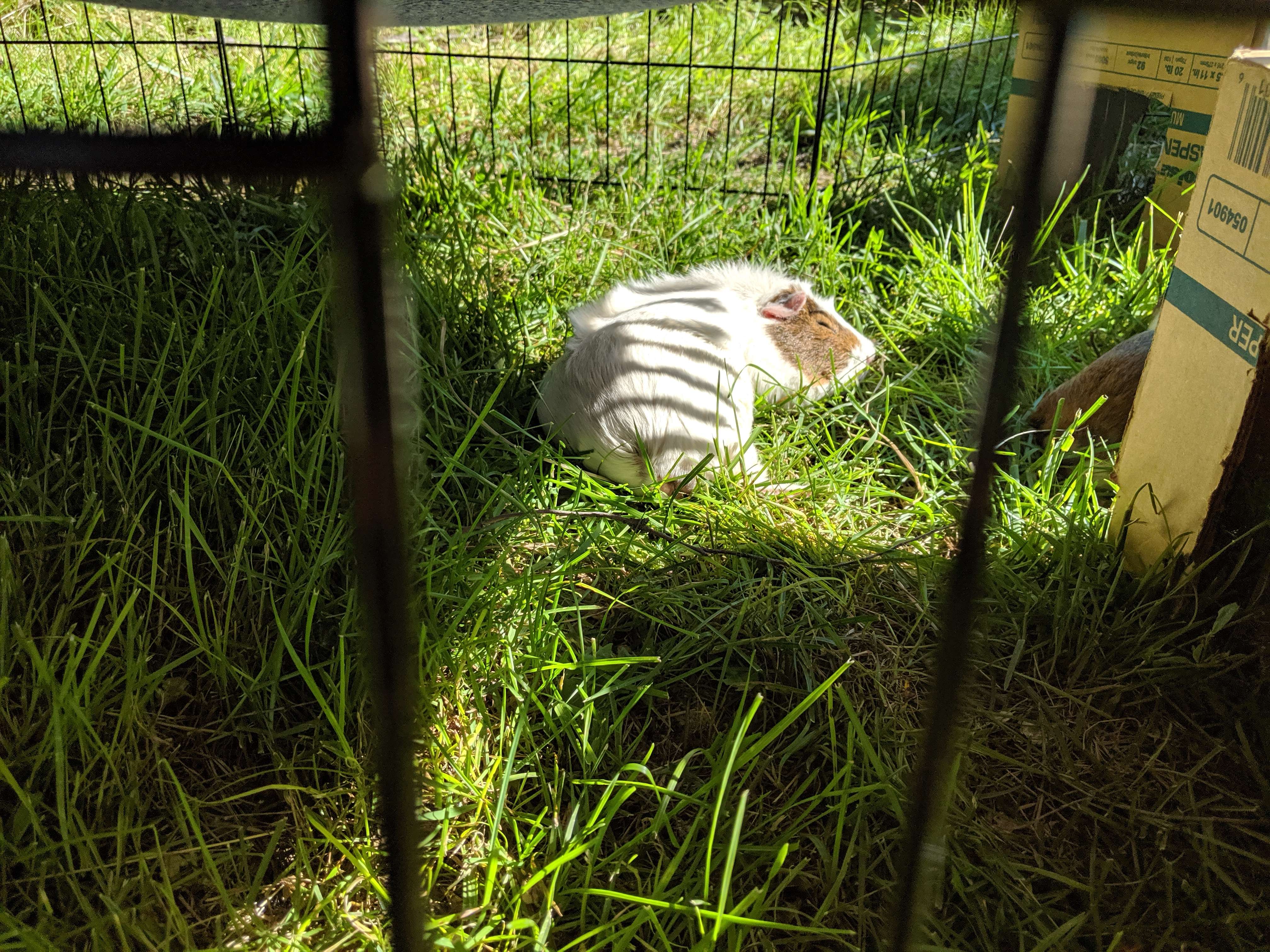
Guinea pigs should never be put outdoors in an inappropriate enclosure, even under supervision. Supervision helps you react to a problem, but it doesn't make an open pen safe. A predator will always be faster than you.
Check the entire enclosure before every session, including the bottom edges, corners, gates, and any connections between panels. Look for damage and gaps that could allow a guinea pig to squeeze underneath or between panels, as well as anything loose enough to be pushed aside.
Permanent Pens
If you can afford to build a permanent outdoor pen, consider dedicating a fenced-off section of your yard to guinea pig use. This area can remain inaccessible to other animals even when your guinea pigs aren't outside. This prevents wildlife such as rabbits and rats from regularly wandering through the area and leaving behind droppings or other potential sources of disease.
A permanent area also gives you greater control over the condition of the grass. You can keep it free from lawn treatments and monitor what plants grow there, rather than having to prepare a new spot each time.
Public Spaces
Public parks and other shared green spaces are not recommended. Off-leash dogs, unsupervised children, loud noises, and other unexpected activity can appear without warning. You also have no way to know what has been applied to the grass or when it was last treated. Public lawns may be exposed to pesticides, herbicides, fertilizers, and other chemicals more often than you'd imagine.
Grass and Plant Safety
Grass is one of the best parts of outdoor time, but a lawn is only suitable for grazing when you know what your guinea pigs are eating. Check the entire area before every session, including anything growing or hanging within reach.
Lawn Treatments
Never allow guinea pigs to graze on grass treated with pesticides, herbicides, fertilizers, or animal poisons. If you did not apply a product yourself, check with whoever maintains the area and follow the product's stated re-entry period. Treated grass can look completely normal, so its safety cannot be determined by appearance alone.
Toxic Plants
Identify plants growing in and around the run before allowing your guinea pigs to graze. Guinea pigs will readily nibble on any vegetation within reach, including plants growing along the edges or hanging into the enclosure. Common toxic plants include buttercups, foxglove, and ivy, but potentially harmful plants are not limited to broadleaf species; some wild and ornamental grasses can also be unsafe. Cross reference our Wild Forage guide after positively identifying plant species.
Dedicated Grass
If using an existing lawn feels too uncertain, consider growing grass specifically for your guinea pigs. This can be a section of your yard that is never treated with lawn chemicals, or grass grown in a large tray or kiddie pool that can be placed on a patio or porch. A dedicated grass patch gives you much greater control over what comes into contact with the grass, and reduces concerns about unknown treatments or how the area has been used.
Weather Conditions
Guinea pigs do best at an ambient temperature of 65–75°F (18–24°C). Outdoor time should be planned around the actual conditions rather than if the weather feels comfortable to a person. Avoid extreme heat or cold, strong winds, and other harsh weather conditions.
Humidity is also important to consider, particularly in warm weather. High humidity can make it more difficult for guinea pigs to regulate their body temperature even when the air temperature itself seems reasonable. Check the forecast before each session and consider how conditions may change while they're outside.
Sun and Shade
The run should be partially shaded to prevent heatstroke, and that shade needs to hold up for the whole session—not just the start. Guinea pigs overheat quickly, and a spot that's shaded in the morning can be in full sun an hour later.
That doesn't mean the whole run needs to be covered. Some direct sun is a good thing: it gives guinea pigs UVB exposure that supports vitamin D production. The best approach is a mix of sun and shade, so guinea pigs can move between them on their own and always have somewhere to get out of direct sunlight.
Preparing the Run
Once you've chosen a suitable location and checked the conditions, set up everything your guinea pigs will need before bringing them outside.
Hiding Places
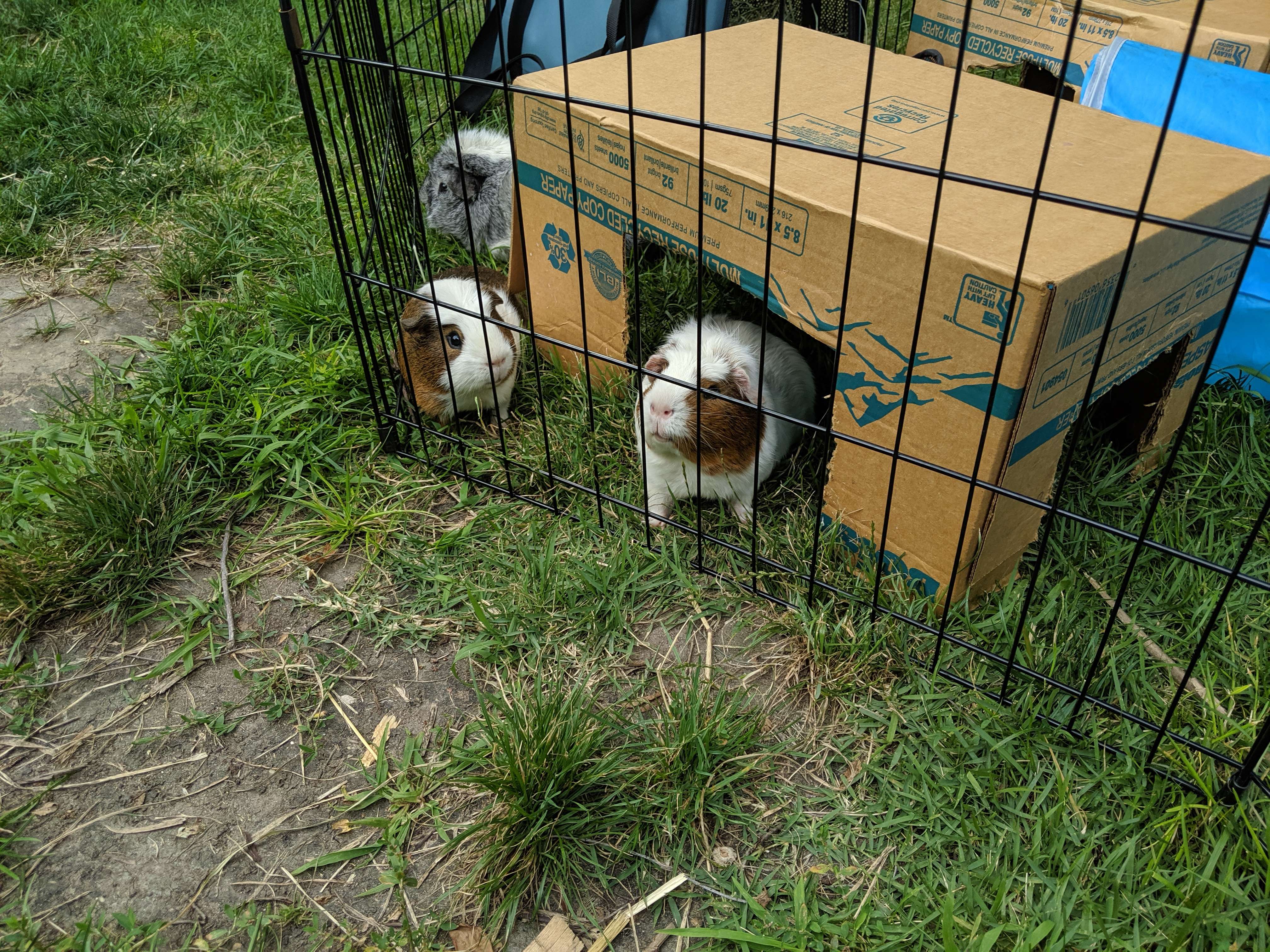
Guinea pigs are prey animals and need somewhere to retreat when they feel exposed. Provide one or more hiding places inside the run so they can get away from open areas and feel secure.
Water
Fresh water should be available throughout outdoor time. It can be provided in a water bottle clipped to the run or with a bowl. Check it regularly for spillage, especially in warm weather.
Enrichment
The outdoor environment itself already provides much of the enrichment. Natural grass offers different textures, smells, and opportunities for grazing and foraging, while the changing surroundings give them plenty to investigate. Tunnels, scattered treats, and other familiar enrichment can still be included, but they are optional rather than necessary.
General Safety
With the run set up and everything in place, outdoor time is also your chance to relax and enjoy the weather while keeping an eye on your guinea pigs. Before you bring them out, though, make sure they're actually up for it.
When to Stay Inside
Sick or recovering guinea pigs should remain indoors until they are healthy. Illness can make it harder for a guinea pig to regulate body temperature or cope with environmental stress, while outdoor time introduces additional variables such as heat, cold, and unfamiliar surroundings.
Herd Companionship
Guinea pigs should not be taken outside alone. An unfamiliar environment can be stressful, and a guinea pig's herd provides social security while they explore. A lone guinea pig outside will often just hide instead of exploring. With another guinea pig there, they feel safer, and they also warn each other if something seems wrong. Make sure the run is large enough for the whole herd, with enough room to graze, move around, and get away from each other if needed.
Supervision
Never leave guinea pigs unattended outdoors, even in a secure run and even for a few minutes. A person should remain present and actively watching for the entire session. Outdoor conditions can change quickly, and hazards can appear without warning, including predators, sudden weather changes, escapes, or signs of heat stress.
Supervision means staying close enough to intervene immediately if something goes wrong. Watching from inside the house or relying on a camera is not enough. A camera cannot stop a predator from reaching the run, prevent a guinea pig from escaping, or move them into the shade when they begin overheating. Active, in-person supervision allows problems to be recognized and addressed before they become an emergency.
Session Length
Keep outdoor sessions reasonably short at first. Some guinea pigs settle in quickly and begin grazing and exploring almost immediately, while others need several shorter sessions before they become comfortable with the sights, sounds, smells, and open space of an outdoor environment. Gradually increasing the length of sessions gives them time to adjust without making outdoor time unnecessarily stressful.
There is no need to keep a guinea pig outside for a predetermined length of time. If they remain frightened, spend the entire session hiding, or otherwise seem uncomfortable, bring them indoors and let them settle back into their familiar environment. Indoor floor time provides exercise and enrichment without the added stress of being outdoors. Try outdoor time again another day rather than forcing them to remain outside until they become comfortable.
Ticks and Debris
A quick check-over once your guinea pigs are back inside can catch ticks, debris, or minor injuries picked up during the session. Run your fingers through the coat and check around the ears, face, feet, and belly for ticks.
If you find a tick: use tweezers to grasp the tick as close to the skin as possible, then pull straight upward with steady, even pressure. Don't twist or jerk, and avoid squeezing the tick's body, since this can push infectious fluid back into the bite wound. The CDC also advises against folk remedies like petroleum jelly, nail polish, or heat to try to make the tick back out on its own—these methods don't work and can cause the tick to release more infectious fluid before it's removed. Once it's out, clean the area with mild soap and water or a pet-safe antiseptic, and dispose of the tick by placing it in alcohol, sealing it in a bag, or flushing it. Monitor the bite site over the following days for redness, swelling, or scabbing that doesn't heal normally, and contact your exotics veterinarian if you notice any of these signs.
Check long coats for burrs, seeds, grass, mats, and other debris that may have become caught in the fur. Look over the paws and nails as well for cuts, splinters, or other debris picked up outside.
Outdoor Escapes
An escape outdoors is a lot more serious than an escape indoors. A guinea pig that gets out of an indoor playpen is still somewhere inside the house, where the environment is familiar and the area is relatively contained. A guinea pig that escapes an outdoor run can disappear into a garden, neighboring yard, or dense vegetation within seconds, making them much harder to find.
Guinea pigs can also move surprisingly quickly when startled. Once they are loose, their instinct is often to freeze or hide rather than come toward a person or make themselves visible. A frightened guinea pig can remain completely still and difficult to spot, even when they are nearby.
An escaped guinea pig is also exposed to hazards that do not exist indoors, including predators, traffic, toxic plants, extreme temperatures, and other outdoor dangers. In the worst case, an escaped guinea pig may never be found or may be seriously injured or killed before they can be recovered.
For this reason, check the entire enclosure for gaps, loose panels, and other potential escape points before every session, and remain present and attentive for the entire time your guinea pigs are outdoors.
Luring Them Back
A frightened guinea pig can be difficult to catch, but it is still worth trying. Guinea pigs do not reliably come when called, and a frightened guinea pig surrounded by abundant grass is less likely to approach food than one indoors. Do not be discouraged if your first attempts are unsuccessful.
Putting their guinea pig companions outside in a run may help draw a lost guinea pig back. A lost guinea pig is often more responsive to the sounds of its herd than to food alone. Place the run where the lost guinea pig can hear the others, and give them time to vocalize and move around normally. Familiar sounds may encourage them to come closer or reveal where they're hiding. Offering their usual vegetables or hay can help keep the companions active while you watch the surrounding area.
Catching an Escaped Guinea Pig
Outdoor escapes are urgent and life-threatening. Always be proactive rather than waiting to see if they turn up on their own. If you haven't spotted the escaped guinea pig within 30 minutes, and food and companions aren't bringing them back, start calling professionals, family, friends, or neighbors for help right away. Catching an escaped guinea pig is a race against the clock: the longer they're out, the further they can travel, and the greater the risk they get stuck somewhere, are caught by a predator, or are lost for good.
Once you have a line of sight on them, don't rush in directly — guinea pigs bolt fast when approached head-on, and a failed grab attempt can send them further away or into hiding. A slow, patient approach works better than trying to close the distance quickly.
- Corral them into a boxed-in area. Use boards, panels, or anything similar to close off a small section of the yard and narrow their options, then catch them within that confined space.
- Use a fishing net. A net with a long handle can help you close the distance without needing to grab them directly.
- Use a drop trap. These can be very effective for a guinea pig that won't approach a person directly.
- Call a local animal rescue. Some rescues have direct experience catching guinea pigs from dump sites, and they may be able to lend you a drop trap on short notice.
Escapes are frightening, but they're also rare when a run is checked and secured properly before every session. With the right precautions in place, outdoor time can be one of the most enriching parts of a guinea pig's routine. The sunshine, fresh grass, and natural surroundings offer something indoor floor time simply can't replicate, and most sessions end exactly the way they should: with a happy, well-fed guinea pig ready to settle back in at home. A little preparation goes a long way toward making sure outdoor time stays a highlight rather than a risk.