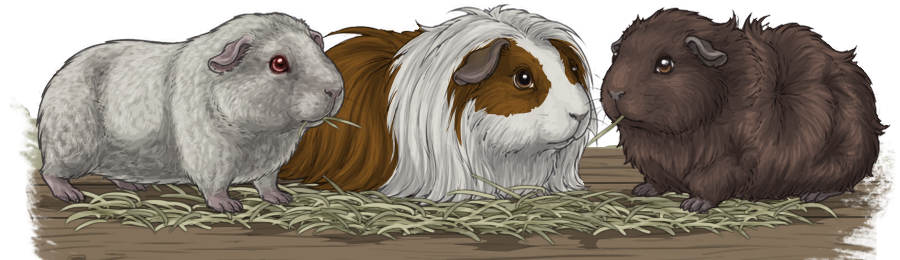
Guinea pigs are prey animals. Staying hidden from predators was how their wild ancestors survived, and that instinct remains strong in domestic guinea pigs today. Hiding is a normal and important behavior, even in the safety of a home. Without access to cover, a guinea pig do not feel safe in their environment.
Hideaways give guinea pigs a place to retreat, rest, sleep, and observe their surroundings without feeling exposed. Every guinea pig should have access to their own hidey as part of a well-designed cage. Offering several types of cover also lets your guinea pigs choose where they feel most comfortable.
How Many Hides?
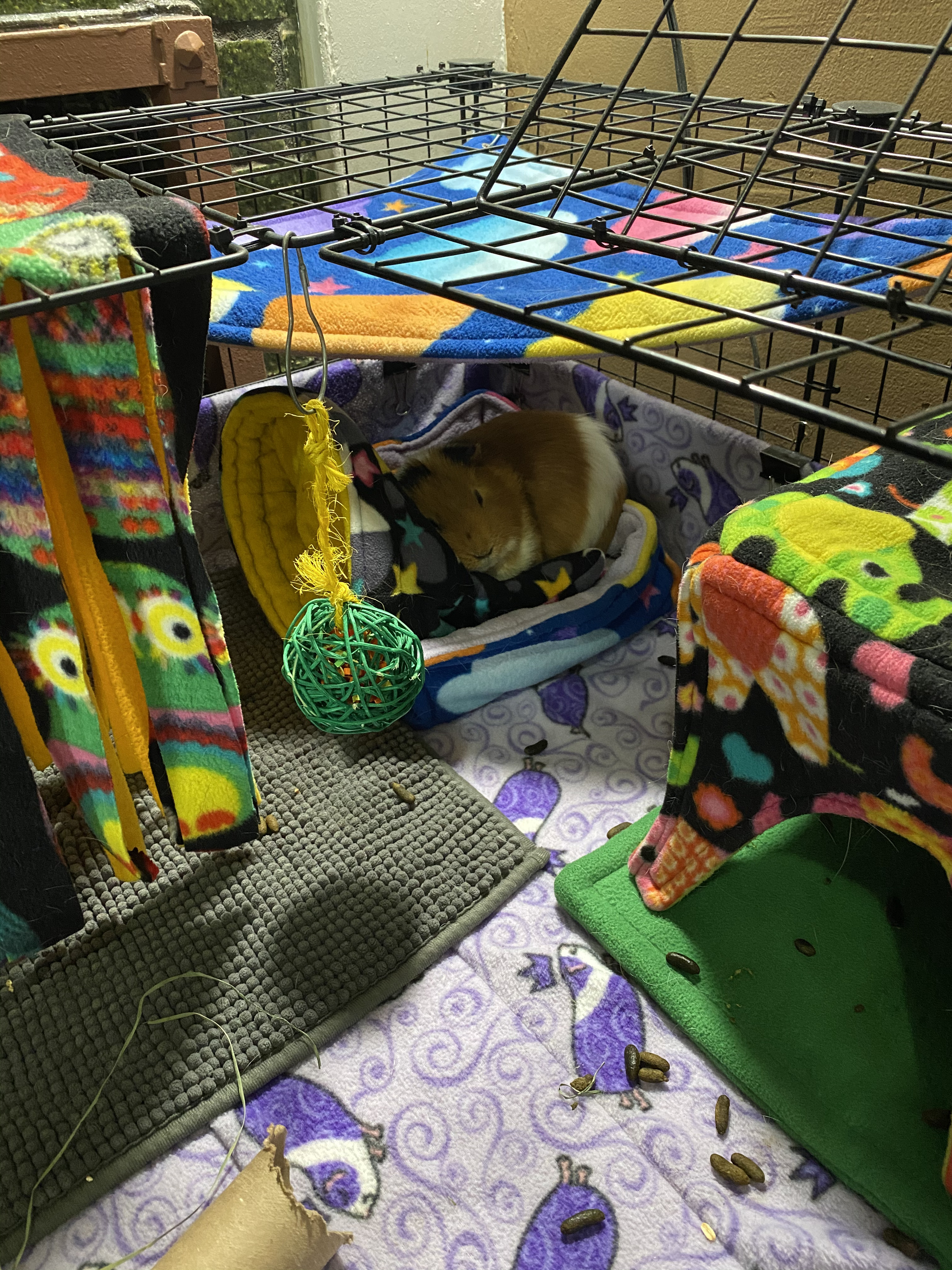
We recommend providing at least one hideaway per guinea pig, even if they usually like to share. Spread hideys around the cage rather than clustering them in one spot, so no one feels crowded and a pig that's annoyed with their cagemate has somewhere else to go. Rotating or rearranging them from time to time also keeps the cage interesting.
Guinea pigs live in herds, but that doesn't mean they want to share everything. Like most social animals, they still compete over resources—and a hiding spot is one of the best resources in the cage. If there's only one appealing hide, the most dominant guinea pig in the group can claim it and guard the entrance, chasing off or nipping at any cagemate who tries to get close.
Without other hideaways, a guinea pig that gets turned away ends up with nowhere to retreat when they're stressed or just want to be alone. Guarding behavior can also escalate: what starts as one pig posturing at the entrance of a hide can turn into chasing, teeth-chattering, or biting, especially as guinea pigs mature and start testing the groups pecking order. Providing one hidey for every guinea pig takes the competition out of the equation, and allows everyone to relax in peace.
Choosing Hides
Not every hidey sold for guinea pigs is actually built with guinea pig safety in mind. Many products marketed for small pets are built to catch a shopper's attention, but there are but there are real differences in how well they hold up to daily use. Before picking a style, it helps to know what separates a genuinely good hideaway from one that just looks nice.
Two or More Openings
A hide with only one entrance is a dead end. A single doorway allows dominant guinea pigs to block or guard the entrance, trapping any cagemate who goes in with no way to escape a confrontation. This kind of setup can breed ongoing tension between cagemates. With a guinea pig cornered inside, confrontations can quickly escalate into serious fights. Always chose hideaways that offer multiple exits, so there's always an escape route.
Enough Room
Choose a size that accommodates a full-grown guinea pig. Hides should be roomy enough for your guinea pig to walk in, turn around, and walk back out easily. If it's too small for that, it’s not a functional hideaway—it’s simply taking up space in the cage.
More space isn’t always better. Guinea pigs tend to feel more secure in a cozy, den-like hide than in one that feels too open. It should give them enough room to move around without making the space feel unnecessarily large.
Open Bottom
A hide that lets your guinea pig sit directly on the cages bedding, rather than a hard plastic or wood, is more comfortable and safer for their feet. It's also necessary for absorbing urine: bedding underneath can soak it up, while a solid bottom just lets it pool inside the hide.
No Small Windows, Gaps, or Holes
Decorative cutouts, lattice work, and narrow gaps look appealing to us, but they can be an injury risk. If an opening is narrow enough for a head or foot to get wedged in, your guinea pig could end up stuck, panicking, or hurt trying to pull free. The safest choice is a hide with no windows at all. If you do go with one that has them, the windows should be small enough that there's no chance of a head fitting in partway. The same goes for ramps and bridges: check that there are no gaps in the flooring or railings where a foot could get caught.
Safe, Non-Toxic Materials
Most guinea pigs chew on their hideaway sooner or later, so anything going into the cage should be safe to gnaw on. Stick to untreated solid wood, plain cardboard, pet-safe plastics, and fleece. Avoid plywood, paints, varnishes, glues, staples, and treated or scented woods like cedar and pine.
Sized and Placed to Fit
A hide that crowds out the rest of the cage can cause its own problems. Take a look at how much of your cage's square footage a hide would actually take up, and whether your guinea pigs would still have enough room to run, forage, and play.
Placement matters as much as size. Guinea pigs want to be able to move around their enclosure with cover, but they still need a stretch of open space to graze and interact on. A common way to balance both is to line hides up along the edges of the cage, keeping the middle clear as an open grazing area. Use corners and other dead space that wouldn't get used much anyway—especially in a minimum-size cage, where every inch counts.
Suggested Styles
There is no single best option for every guinea pig. Individual animals have different preferences, so offering a variety of styles helps you find what works best for your herd.
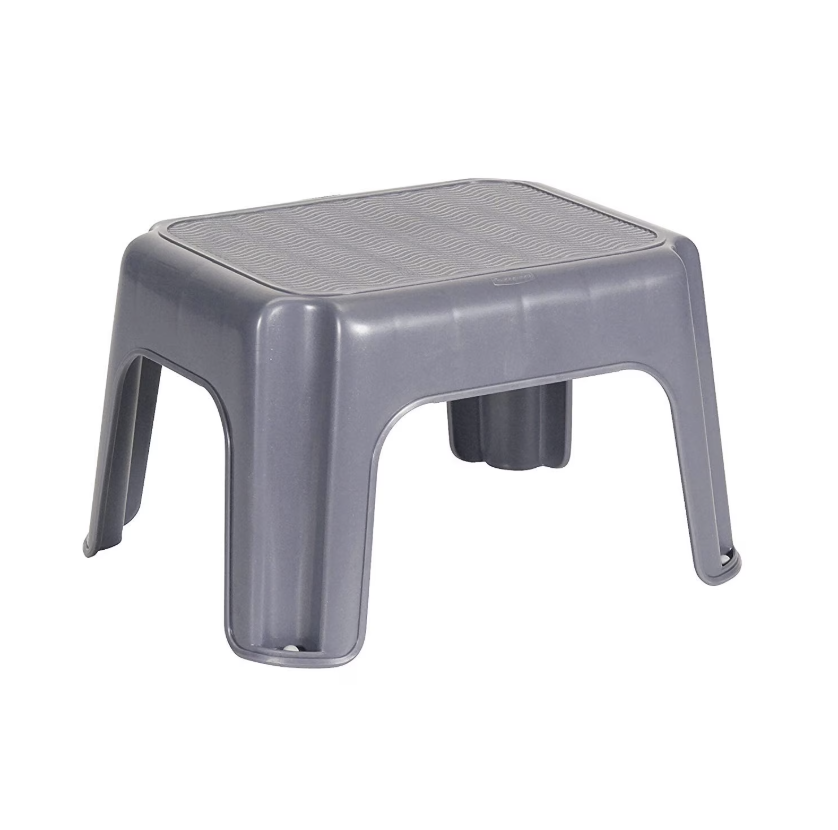
Our top pick for new owners is a simple plastic step stool. It's safe, easy to clean/disinfect, and has open sides while providing a raised spot for guinea pigs who enjoy perching. We've never met a guinea pig that didn't like one.
Link: https://www.amazon.com/Rubbermaid-Step-Stool-FG275300CYLND-Small/dp/B00NCNW3CA/
A step stool is a great place to start, but it doesn't have to be your only option. Mixing in different shapes, materials, and textures lets your guinea pigs choose where they feel safest, and gives each pig a spot of their own.
Cardboard Boxes
Cardboard is inexpensive, easy to replace, and suitable for guinea pigs who enjoy chewing. It's also an easy way to try new shapes and positions without spending much. You can customize cardboard boxes in a variety of ways to meet your pets preference.
Precut cardboard hideouts sold for cats and other small pets work well too, as long as you pick a size your guinea pig can comfortably fit through. When possible, cut the bottom out so your guinea pig sits directly on bedding rather than bare cardboard.
What to look for:
- Plain, unprinted cardboard. Avoid glossy or heavily printed boxes.
- No tape, staples, glue, or plastic windows. Remove them before use.
- At least two doorways. If you make your own from a box, cut an entrance at each end.
- An open or removable bottom where possible.
Wooden Huts
Wooden huts are sturdy and look natural in the cage. They stand up to occasional chewing when built from a safe wood. Many guinea pigs like their solid, den-like feel.
What to look for:
- Safe, untreated wood. Avoid painted, varnished, or pressure-treated wood, and avoid cedar.
- Two openings, such as a front door and a side door, or open sides.
- No decorative windows or cutouts that a head could get stuck in.
- Smooth edges, with no splinters or protruding nails or staples.
Tunnels
Tunnels come in a variety of materials, including woven hay or rattan, wooden bendy bridges, fabric or fleece, cardboard, and plastic. Unlike a hut, a tunnel is as much a pathway as a hiding place. Many guinea pigs enjoy running through them, and a tunnel can link different areas of the cage with a covered route.
What to look for:
- A shape that won't roll. Don't use round tubes that can roll when a guinea pig climbs on or runs through them. Choose flat-bottomed or arched tunnels instead.
- Large openings at each end, so your largest pig can walk through easily.
- For woven or wooden tunnels: untreated, natural materials, and tight weaving with no loose wires or sharp ends.
Fleece Hides
Fleece hideys are a soft alternative, and many guinea pigs love to snuggle into them. They're washable and reusable, and they fit naturally into cages that already use fleece bedding. The trade-off is upkeep: fabric soaks up urine, so fleece hides need regular washing.
Fleece hides come in a variety of styles:
- Cubes – a sewn fabric box with open sides.
- Forests – a frame with fleece strips hanging down that guinea pigs push through to hide inside; often suits shy pigs and pigs who don't like hard hides.
- Sacks – a fleece pouch that guinea pigs crawl into.
- Hammocks – fabric slung above the cage floor, sometimes with dangling fleece strips, for guinea pigs to duck under or climb into.
What to look for:
- Two or more openings. A single-entrance sack is best kept for a guinea pig who lives alone or has plenty of other hides.
- A shape that holds up, so the roof or sides of a cube don't sag onto your pig.
- Neat seams with no loose threads, which can wrap around toes.
- Hammocks hung low to the floor. Guinea pigs aren't natural climbers, so a fall from a high hammock can hurt them.
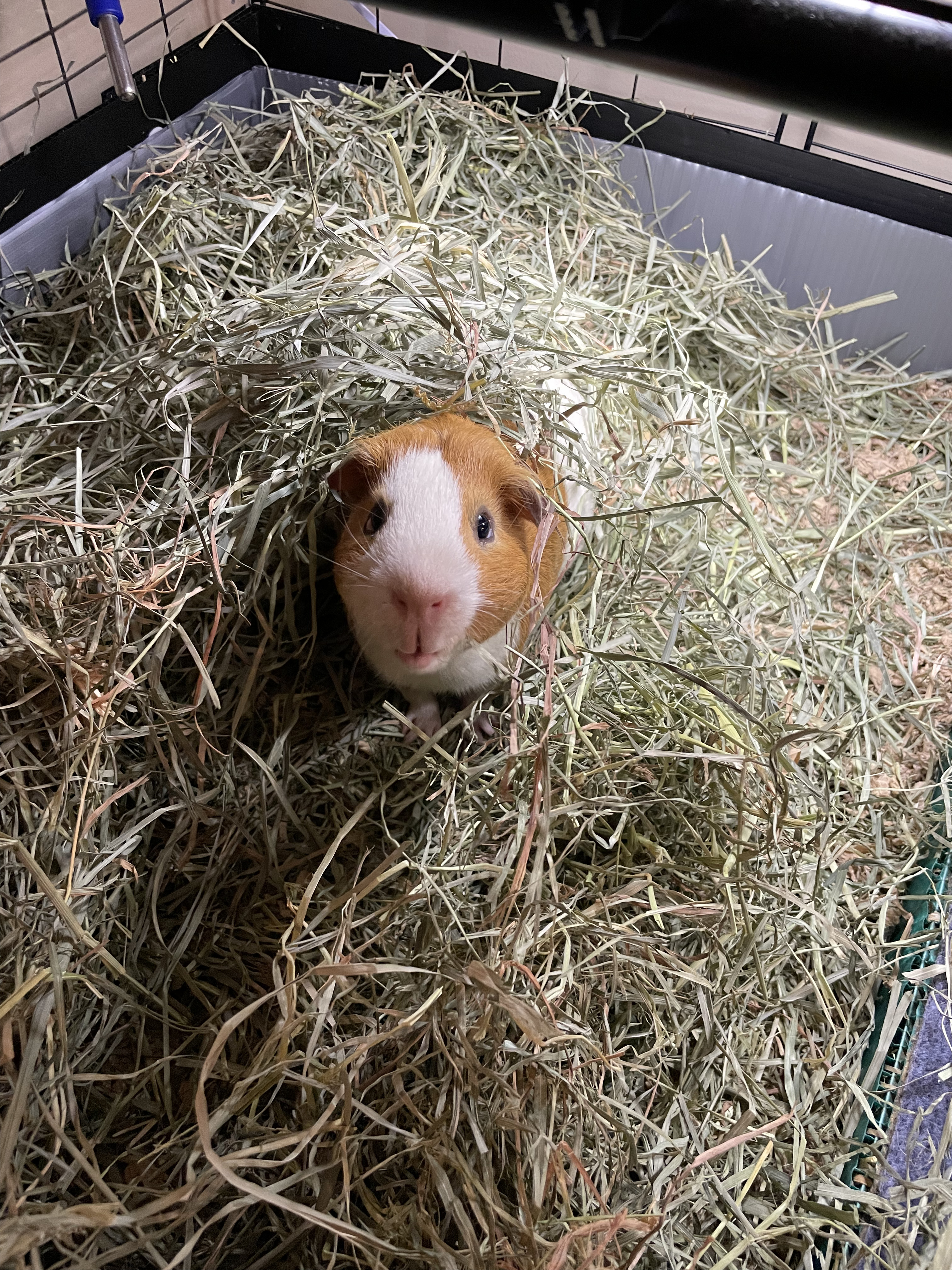
Some guinea pigs may strongly prefer one style over another. A guinea pig who ignores a wooden hut might dive straight into a fleece forest, and vice versa—so an unused hide does not mean your guinea pig doesn't like hiding. If a hideaway sits unused, don't assume your guinea pig dislikes hiding: try moving it to a new spot or swapping in a different style. It may take a few tries before you find the one they love.
Other Hiding Spots
Cover doesn't have to come from a purpose-built hide. These options work well too:
- Hay piles – a deep pile of hay gives cover and food at the same time.
- Space under a ramp or loft – the area beneath a cage loft or wide ramp can make a natural hideout.
- Draped fabric – draping fabric over part of the cage creates a shaded, covered area. Secure it firmly so it can't fall onto your guinea pigs, and leave most of the cage uncovered so air keeps moving.
Safety Considerations
A hide can look perfectly fine and still create problems you wouldn't expect. Here's what to watch for.
Overheating: The inside of a hide is almost always warmer than the air surrounding it, since solid walls block airflow and trap body heat. This matters most in outdoor cages, especially during warm weather, so be cautious with fully enclosed styles—like plastic pigloos or PVC piping—that block airflow from every side.
Ammonia: Guinea pigs pee and poop constantly, and a lot of it ends up in their hideys. A hide with poor airflow can trap that waste, turning it into a small gas chamber your guinea pig sits in for hours at a time. Move hides to a new spot in the cage regularly, spot-clean the bedding underneath, and consider using potty pads to keep the area sanitary.
Dyes: Most hide dyes are soy-based or just vegetable coloring and are not usually a health concern. If a color looks unusually intense or the source is unclear, contact the manufacturer or choose an undyed hide.
Splinters and Damage: Check hideaways regularly for damages. Chewing and daily wear can raise splinters, fray edges, or loosen joints over time, turning a hide that was safe a month ago into a hazard now.
Edible Hides: Some hides are marketed as edible, made from hay or seed mixes held together with ingredients like honey or molasses. We don't recommend edible hideys. Guinea pigs shouldn't have added sugar, and an edible hide sitting in the cage puts it within reach around the clock instead of as an occasional treat.
Chewing: Unlike some other rodents, guinea pigs don't destroy their hideaways quickly. With enough hay in the cage, most guinea pigs direct their chewing there and leave hides more or less alone. If you're seeing heavy chew damage on a hide, try adding more or bigger piles of hay before assuming the hide itself is the problem.
Cleaning and Maintenance
Guinea pigs poop and pee inside their hides, so these spots get dirty fast, no matter what they're made of. Beyond the general upkeep covered above, care depends on the material:
- Plastic: Fully washable and can be disinfected between cleanings. Because guinea pigs tend to soil the bedding underneath, move plastic hides to a new spot in the cage every day and spot-clean under them to keep ammonia from building up.
- Cardboard: Can't be washed or disinfected. Replace it as soon as it's soiled, damp, or chewed down to the point it could collapse.
- Wood: Wood is porous, so it absorbs urine rather than letting it wipe away, and can't be fully cleaned. Replace any hut that smells of urine, stays damp, or shows mold or heavy wear.
- Woven or natural tunnels (hay, rattan, wood): Similar to wood, it can't be washed or disinfected, so wipe down what you can and replace it once the tunnel is soiled, worn, or starting to fray.
- Fleece: Fully washable and reusable. Keeping a spare set on hand makes it easy to rotate a clean one in while the other is in the wash, so your guinea pigs always have coverage and safety.