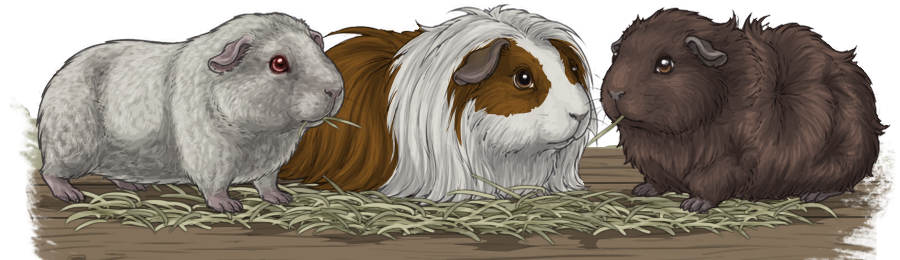
Toys are one way to add more enrichment to your pets daily life, keeping them active, curious and engaged. Some guinea pigs love toys, while others couldn't care less. It all comes down to personality. You may need to try several different options before you find something your guinea pigs will enjoy, so don't be discouraged if the first few toys are ignored. That's normal, and it's part of learning what your pets like.
General Safety
Guinea pigs explore the world with their mouths, so expect anything you put in the cage to be chewed and possibly swallowed. Check every toy for these hazards before offering it.
Choking Hazards
Beads, bells, buttons, sequins, and other plastic or metal decorations are easy to chew off. A swallowed piece can get lodged in the throat or cause an intestinal blockage. Beads can also slip over a guinea pigs front teeth and become stuck around the incisors. Toys filled with beads are also risky, since the filling may spill out if a seam or casing breaks open.
Bells and dangling pieces are often attached with thin wire, rings, or small clips, and guinea pigs can chew through thin metal. Once hardware breaks, the decoration and the fastener both become choking hazards, and the broken metal can injure the mouth. Always choose toys with no small parts at all.
Safe Materials
Choose toys made from natural materials such as wood, cardboard, paper, and hay. Plastic, rubber, silicone, and foam chew toys and nesting material are unsafe for guinea pigs. Guinea pigs can bite chunks off these materials, and those pieces become choking hazards. Chewed plastic can also have sharp edges that cut the mouth and gums.
When using wooden toys, always verify that a safe wood was used, such as apple, willow, pear, birch, or aspen. The wood should also be solid and sturdy. Thin pieces, like popsicle sticks, can break into sharp splinters. Plywood, particleboard, and MDF are pressed together with glue, so guinea pigs will end up eating the glue along with the wood. Always avoid cedar and other strongly scented woods, since their phenols can irritate sensitive lungs.
Wooden toys should be natural or colored with vegetable dyes. Paint, stain, and varnish are toxic when swallowed. For colored wooden toys, check that the packaging lists vegetable or food-safe dyes. Avoid wood with a glossy finish, which usually means it has been varnished or sealed. Craft store wood is often painted or sealed, so always choose wooden toys made specifically for small pets.
Cardboard and paper should be plain, unbleached and unprinted. Avoid anything glossy, waxed, or plastic-coated. Remove all tape, staples, labels, stickers, and glue residue. Skip construction paper as well. It's colored with synthetic dyes that aren't meant to be eaten by animals.
Entrapment Risks
Guinea pigs like to push their noses into and through things. Rings, loops and handles can slip over the muzzle and get stuck, and a frightened guinea pig can injure itself trying to get free. This includes ring-shaped chews, hanging loops on bird toys, and cardboard tubes cut into short sections.
An opening large enough for a head to fit through, but too small to back out of easily, can trap a guinea pig. Openings in tubes, paper bags, and woven toys should be large enough for the whole body to pass through or too small for a head to enter.
Threads, ribbons, and cotton rope can wrap around feet, legs, or necks and cut off circulation. Long fibers can also be swallowed and tangle in the gut.
Clutter
Guinea pigs need open floor space to run and popcorn. When they zoom around the cage, they move fast and don't always look where they're going. Too many toys crowd the cage and create things to trip over or crash into.
A crowded cage also causes problems in groups. Guinea pigs that can't easily move past each other are more likely to squabble over space. Two or three toys at a time gives everyone something to enjoy while leaving plenty of room to move.
Homemade Toys
Guinea pigs are natural foragers who love to root, nibble, and pick through their surroundings. The most popular toys tap into that foraging instinct. Many toys can be stuffed with hay, pellets, rolled oats, or dried herbs and flowers such as chamomile, calendula, or rose petals. Stuffed toys are a bonus on top of the unlimited hay your guinea pigs should always have, so consider using a type of hay they don't always have access to—like meadow hay or oat hay.
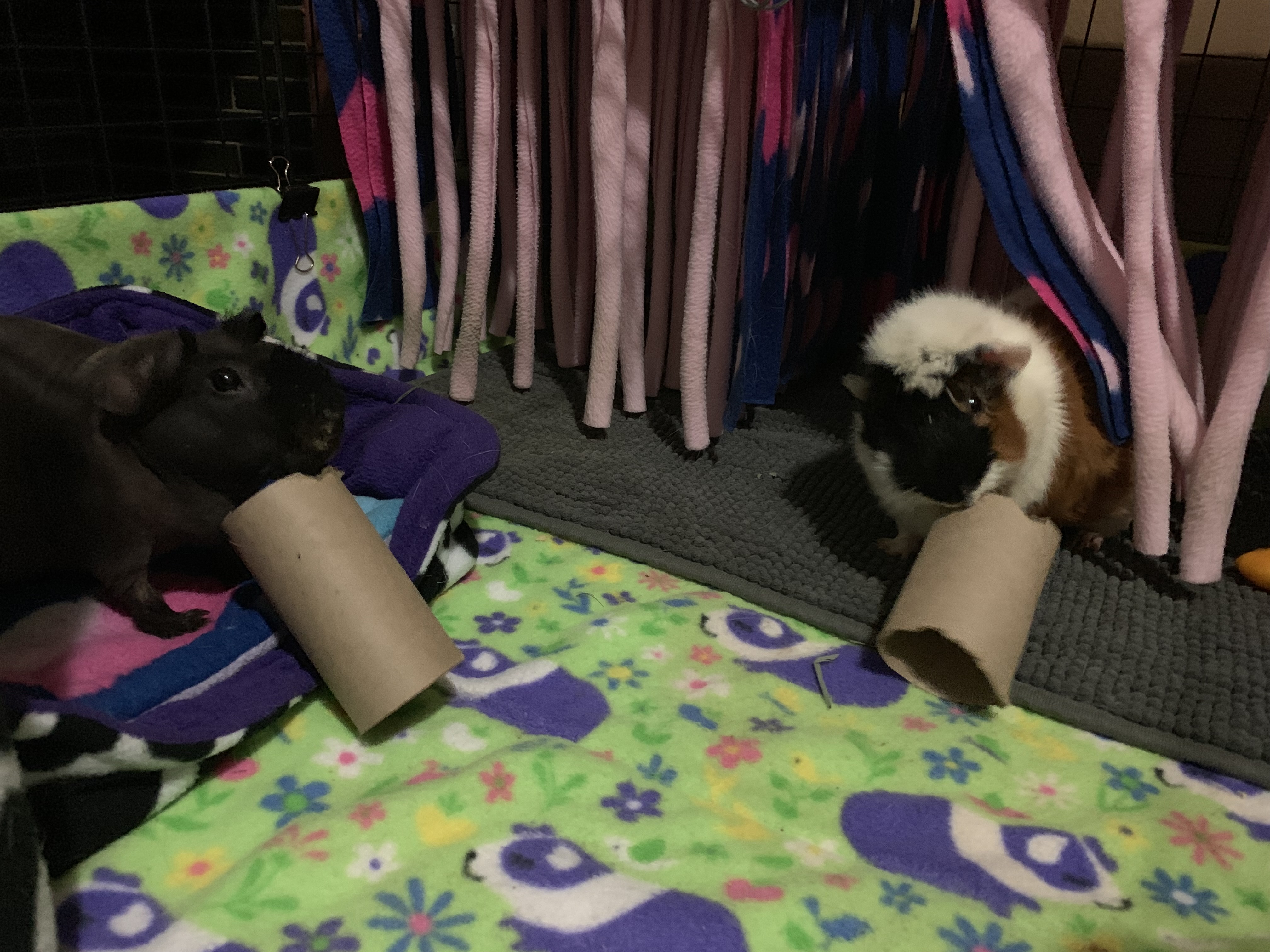
Homemade toys are often a guinea pigs favorites, and they cost next to nothing, so you can replace them as soon as they're chewed up or soiled.
Toilet Paper Tubes
Cardboard toilet paper and paper towel tubes are one of the cheapest and most popular guinea pig toys, and most households already have a steady supply. Guinea pigs will chew them, toss them, and push them around the cage. Offer tubes plain or stuffed. Use only unbleached brown tubes, and check that they're free of glue residue. Skip tubes that have been bleached white.
For babies and very small guinea pigs, cut a slit down the full length of the tube. Their small heads can fit inside and get stuck, and the slit lets the cardboard spring open so they can pull free.
Paper Bags
A brown paper bag filled with hay turns into a combined hideout, foraging station, and chew toy. Cut off the handles, fill the bag with fresh hay, and fold the top down so the opening stays wide. Your guinea pigs will burrow in, eat their way through the hay, and eventually shred the bag itself.
Paper Crinkle Balls
Crumple plain packing paper into loose balls with some rolled oats or pellets tucked inside. Guinea pigs can smell what's inside and enjoy pulling the paper apart to find it. Keep the balls loose so they're easy to open.
Tree Branches
Branches from safe wood make a natural chew, and many guinea pigs enjoy nibbling the bark and leaves. Source trees that have not been sprayed with pesticides or fertilizers, and that aren't growing along a busy road or drainage runoff. Avoid branches from cherry, plum, peach, and apricot trees, which are toxic to guinea pigs.
Before offering branches, clean them and bake them briefly to kill any insects, insect eggs, and bacteria. Wood can catch fire in the oven, so follow these steps carefully:
- Strip off all leaves and small twigs. These dry out quickly in the oven and can catch fire. Then cut the branches into lengths that fit flat on a baking sheet.
- Scrub them under running water, or soak them for 10 minutes in a sink of water with a splash of white vinegar. Rinse well.
- Line a baking sheet with parchment paper or foil and spread the branches out in a single layer, with space between them.
- Bake at 250°F (120°C) for about 30 to 45 minutes. Thicker branches may need up to an hour so the heat reaches the center. Keep the heat low and never use the broiler.
- Stay nearby while they bake and check every 15 to 20 minutes. Wood that is overheated or left too long can start a fire.
- Let the branches cool completely before offering them.
Grass Tray
A tray of fresh wheatgrass gives guinea pigs a patch to graze, even if they don't go outside. Grow it from untreated seeds, in plain potting soil with no added fertilizer. Offer the tray for short grazing sessions, then put it back to regrow for next time.
Grass grows well indoors with a grow light, even in a small apartment. An old plastic cage base makes an easy planter. Drill drainage holes in the bottom, fill it with soil, and zip-tie a grow light to the cage lid above it. Countertop hydroponic gardens are another option too.
Different Hay Types
A small pile of a hay your guinea pigs don't usually get, such as orchard grass, meadow hay, or oat hay, offers new textures and smells to explore. Placing it somewhere new in the cage encourages them to wander over and investigate.
Pet Shop Toys
Pet shops carry some great options for guinea pigs, but not every toy on the shelf is suitable or safe. Check the materials of any toy against the General Safety section before buying it, even if the packaging says it's made for guinea pigs. We've found these pet shop options work the best:
Treat Balls
Treat dispensing balls release small amounts of food as your guinea pig noses them around the cage. They encourage movement and give your guinea pigs something to figure out. Choose a treat tumbler made of sturdy, hard plastic, and remove it if your guinea pigs chew on it directly.
Fill one with pellets or a small amount of rolled oats. A treat ball is also a great way to serve their regular daily pellets. Measure out their usual portion and put it in the ball, rather than adding pellets on top of what they already get—since too many pellets can lead to weight gain and other health problems.
Puzzles and Snuffle Mats
Treat puzzles (also called foraging puzzles or enrichment boards) hide small treats under sliding panels, lids, or cups that your guinea pig nudges aside with its nose. They offer mental stimulation and give curious guinea pigs something new to explore. Start with the easiest settings so your guinea pigs discover how the puzzle works, then make it harder once they've got the hang of it.
Snuffle mats work on the same idea. These mats are covered in dense strips of fleece, and a few treats scattered among the strips give your guinea pigs something to sniff out and root for. Always choose mats made from fleece, which doesn't fray.
Both work best as a supervised activity. Offer the puzzle or mat, let your guinea pigs explore it, and remove it once they lose interest so it doesn't become a chew toy.
Bird Toys
Ironically, the bird aisle at a pet shop is often a better source of safe toys than the small animal aisle—if you know what to look for. The best options are made from cardboard, chipboard, shredded paper, sisal rope, and wood. Pass on any bird toy that includes plastic, cotton rope, bells, rattles, wooden beads, popsicle sticks, or small rings.
Larger bird toys can often be taken apart and cut into several smaller toys, which stretches your money and lets you offer the pieces one at a time. Remove any wire, hooks, clips, and leftover string before offering the pieces.
Rattan and Willow Balls
Woven rattan and willow balls are a favorite with many guinea pigs. They're light enough to nudge and toss, and satisfying to chew. Only buy balls made for animals. Decorative rattan balls from craft and home décor stores can look identical, but they may be made from unsafe wood or treated with paint, varnish, or fragrance.
Stuffed Animals
Some guinea pigs like to snuggle up against a stuffed animal, especially those who live alone or are recovering from losing a cage mate. Pet shops sell plush toys made for small animals, and many owners also use children's stuffed animals. Whichever you choose, look for:
- 100% cotton fabric and stuffing (check the tag)
- Avoid bead or pellet filling
- No plastic whiskers, beads, buttons, sequins, or other parts that can be chewed off
- Embroidered or stitched-on eyes and nose only
Stuffed animals are for snuggling and comfort, not chewing. If your guinea pig starts chewing one, remove it right away.
Hay Twists
Twisted or woven hay toys give guinea pigs something to chew, pull apart, and eat. Check the ingredients and choose toys made from grass hay, such as timothy or orchard grass. Avoid hay toys made from alfalfa.
Wooden Chews
Apple sticks are a natural chew that many guinea pigs enjoy. They're available from most pet suppliers, or you can cut your own from an unsprayed apple tree and prepare them the same way as fresh branches.
Wooden chew blocks give guinea pigs something solid to gnaw on. Choose blocks made for small animals from untreated, unpainted wood. Do not use baby blocks as chew toys.
Maintenance
Regular care keeps toys safe over time. Chewing gradually wears toys down, and guinea pigs aren't picky about where they urinate, so toys get dirty quickly. Inspecting, cleaning, and rotating toys keeps them in good condition and helps prevent mold and bacteria.
Inspecting and Replacing
Inspect toys every day or two. Look for splintered wood, unraveling fibers or rope, open seams, and chews worn small enough to swallow. Trim loose threads and remove any toy that is worn or damaged. Replace cardboard and paper toys when they're soiled or chewed down, and throw out any leftover filling with them.
Cleaning
Keep wooden and woven toys dry. Brush or shake off hay, bedding, and droppings. Throw out any wooden, rattan, or willow toy that becomes soiled with urine or shows signs of mold.
Empty treat balls and puzzles after each use. Remove leftover food before it goes stale or moldy, and brush out any debris.
Machine wash fabric toys. Wash stuffed animals, plush toys, and snuffle mats on a hot cycle with unscented detergent and no fabric softener. Keeping a spare lets you swap one in while the other is in the wash.
Wash plastic items with mild soap and water. This includes grass trays and cage-base planters. Rinse them well.
Dry items completely before returning them to the cage. Damp fabric can grow mold and bacteria. Drying in the sun works well.
Rotating and Storing
Rotate toys every week or so. A toy your guinea pigs haven't seen in a while feels new again, and rotating keeps a variety on hand without crowding the cage. Store clean toys somewhere dry and out of reach of pests.